Sensor Devices or Modules That Detect Physical Or Environmental Changes
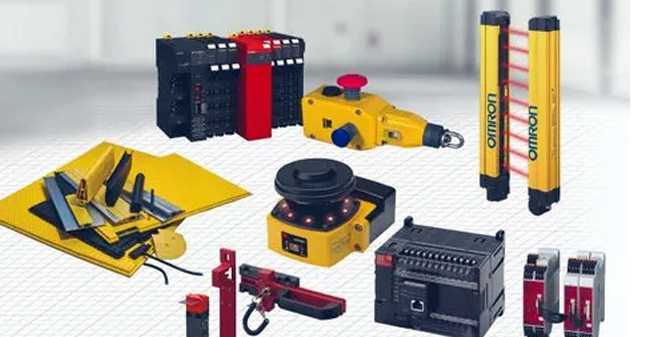
Sensing components, also known as sensors, are devices or modules that detect physical or environmental changes and convert them into measurable signals or data. These components are essential in various fields, including electronics, automation, automotive, and more. Here are some common features and characteristics of sensing components:
Detection Capabilities: Sensing components are designed to detect specific physical phenomena or environmental changes. This can include things like temperature, pressure, light, motion, sound, humidity, gas concentration, and more.
Transduction: They employ transduction methods to convert the detected input into an electrical signal, which can be easily processed by electronic circuits. Common transduction methods include resistive, capacitive, inductive, piezoelectric, optical, and magnetic.
Output Signal Type: Sensing components can produce various types of output signals, such as voltage, current, resistance, frequency, or digital data. The type of signal depends on the specific sensor and its application.
Range: The range of values that a sensor can detect is an important feature. For instance, a temperature sensor might be able to measure temperatures within a specific range, such as -40°C to 125°C.
Accuracy: Sensing components vary in terms of accuracy. Some are highly precise, while others are more suitable for rough measurements. Accuracy is typically specified in terms of a percentage of full-scale range or in terms of absolute values.
Resolution: Resolution refers to the smallest incremental change that a sensor can detect. It is usually specified in units of measurement (e.g., millimeters, degrees, and lux).
Response Time: Sensors have a response time, which is the time it takes for a sensor to detect a change and produce a corresponding output signal. The response time can be critical in applications where rapid changes need to be detected.
Calibration: Many sensors require periodic calibration to maintain accuracy. Calibration ensures that the sensor’s output corresponds to the actual physical quantity being measured.
Sensitivity: Sensitivity is a measure of how much the sensor’s output changes in response to a given change in the input variable. High sensitivity means that small changes in the input result in significant changes in the output.
Environmental Conditions: Some sensors are designed to operate in specific environmental conditions, such as extreme temperatures, humidity, or corrosive atmospheres. Others are more versatile and can be used in a wider range of environments.
Size and Form Factor: Sensing components come in various sizes and form factors, depending on the application. Some are very small and can be integrated into compact devices, while others are larger and more robust.
Durability: The durability of a sensor is essential in applications where it may be subjected to physical stress, such as in industrial settings or automotive applications.
Cost: The cost of a sensing component can vary widely based on its features, accuracy, and capabilities. Some applications may require more expensive, high-precision sensors, while others can use more cost-effective options.
The specific features of a sensing component will depend on the type of sensor and its intended application. Different sensors are designed to excel in various environments and scenarios, and their features are tailored accordingly.
For More Visit Our maps